

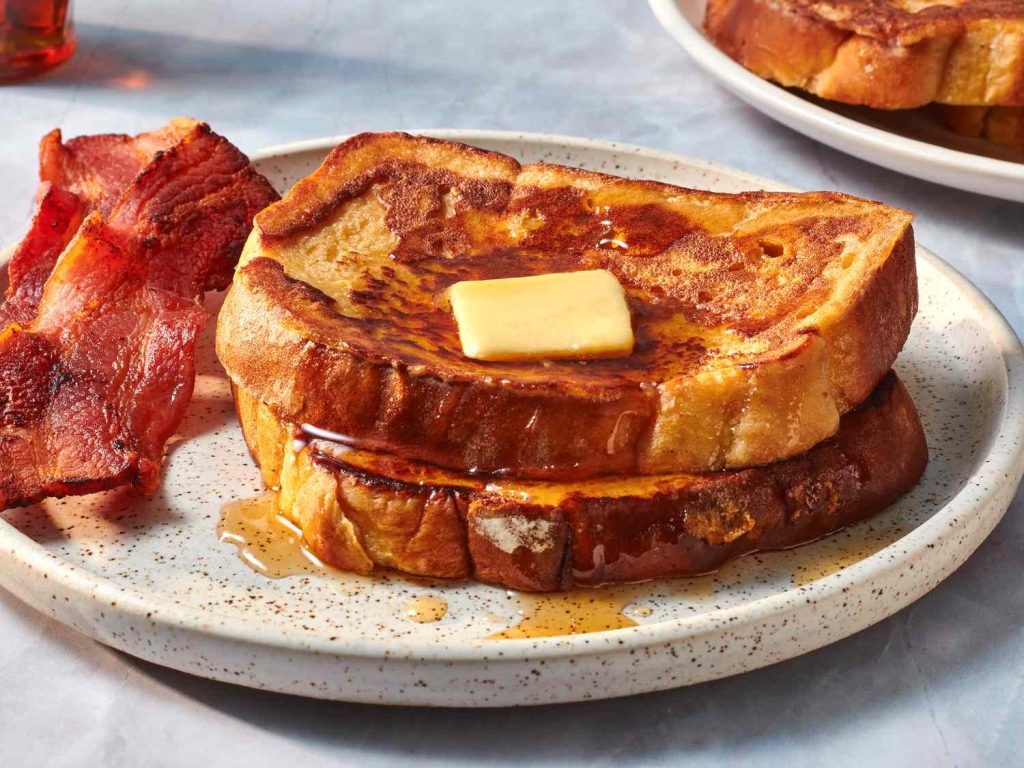
Easy French Toast turns thick slices of bread into a warm breakfast with golden edges and a soft, custardy center. The bread is dipped in a simple mixture of eggs, milk, vanilla, cinnamon, and sugar before being cooked in butter.
The recipe takes about 25 minutes and works for a weekday breakfast or weekend brunch. Serve the slices with maple syrup, berries, powdered sugar, or a combination of your favorite toppings.
Why You’ll Love This Recipe
- Ready in approximately 25 minutes.
- Uses basic breakfast ingredients.
- Works especially well with slightly stale bread.
- Can be customized with different spices and toppings.
- Easy to double for a larger group.
- Leftover slices can be refrigerated or frozen.
Ingredients
For the French Toast
- 4 large eggs
- 1 cup whole milk
- 2 tablespoons granulated sugar
- 2 teaspoons vanilla extract
- 1 teaspoon ground cinnamon
- 1/4 teaspoon kosher salt
- 8 thick slices brioche, challah, or Texas toast
- 2 tablespoons unsalted butter, divided
For Serving
- 1/2 cup maple syrup
- 1 cup fresh berries
- 2 tablespoons powdered sugar
Thick bread absorbs enough custard to create a tender center without falling apart. Slightly stale bread works particularly well because it can absorb the egg mixture while maintaining its structure.
Ingredient Substitutions
- Whole milk: Use 2% milk, half-and-half, oat milk, or unsweetened almond milk.
- Brioche: Substitute challah, Texas toast, French bread, or thick-cut sandwich bread.
- Granulated sugar: Use light brown sugar for a mild caramel flavor.
- Unsalted butter: Use salted butter and omit the added salt, or cook with neutral oil.
- Vanilla extract: Replace it with 1/2 teaspoon almond extract or omit it.
- Ground cinnamon: Use pumpkin pie spice or leave it out.
- Maple syrup: Serve with honey, fruit preserves, or warmed apples instead.
How to Make French Toast
- Prepare the custard.
Crack the eggs into a wide, shallow bowl or baking dish. Whisk until the yolks and whites are fully combined. - Add the remaining custard ingredients.
Pour in the milk, then add the sugar, vanilla, cinnamon, and salt. Whisk vigorously until the mixture is smooth and the cinnamon is distributed as evenly as possible. - Preheat the skillet.
Place a large nonstick skillet or griddle over medium heat. Let it warm for 2 to 3 minutes, then melt approximately 1/2 tablespoon butter over the surface. - Dip the bread.
Place one or two slices of bread in the custard. Let each side soak for approximately 10 to 15 seconds. The bread should absorb some liquid without becoming saturated enough to fall apart. - Drain the excess custard.
Lift each slice from the bowl and let the extra custard drip off for several seconds. Transfer it directly to the hot skillet. - Cook the first side.
Cook for 2 to 3 minutes. The underside should be evenly golden brown, and the edges should begin to look set. - Flip the French toast.
Turn each slice with a wide spatula. Cook for another 2 to 3 minutes, until the second side is golden and the center feels set rather than wet. - Cook the remaining slices.
Repeat with the remaining bread, adding more butter to the skillet as needed. Whisk the custard briefly between batches because the cinnamon may settle. - Serve warm.
Top the French toast with maple syrup, berries, and a light dusting of powdered sugar.
Tips for the Best Easy French Toast
- Use bread cut approximately 3/4 to 1 inch thick.
- Choose slightly stale bread rather than very fresh, soft bread.
- Whisk the custard again between batches.
- Soak each slice briefly instead of leaving it submerged.
- Cook over medium heat so the center sets before the outside becomes too dark.
- Add fresh butter between batches if the skillet becomes dry.
- Keep cooked slices warm in a 200°F oven while finishing the remaining bread.
Common Mistakes to Avoid
Using Bread That Is Too Thin
Thin sandwich bread can become soggy or tear during dipping. Thick slices are easier to handle and create a better contrast between the center and edges.
Soaking the Bread Too Long
Leaving bread in the custard for an extended time can make the center wet and difficult to cook. A brief soak is enough for most breads.
Cooking Over High Heat
High heat browns the outside before the egg mixture in the center has time to cook. Use medium heat and adjust it between batches if necessary.
Using a Cold Skillet
French toast added to a cold pan may absorb the butter and cook unevenly. Preheat the skillet before adding the first slice.
Skipping the Whisking Between Batches
Cinnamon can settle or collect on the surface. Whisk the custard again before dipping each new batch.
Variations
Cinnamon-Raisin French Toast
Use thick slices of cinnamon-raisin bread. Reduce the ground cinnamon in the custard to 1/2 teaspoon.
Orange French Toast
Add 1 teaspoon finely grated orange zest to the custard. Serve with fresh berries and maple syrup.
Banana French Toast
Top the cooked slices with banana rounds and chopped pecans. Add a small pinch of nutmeg to the custard.
Chocolate Chip French Toast
Sprinkle miniature chocolate chips over the slices immediately after cooking. Serve with strawberries instead of maple syrup for a less sweet option.
Dairy-Free French Toast
Use unsweetened oat or almond milk and cook the slices with plant-based butter or neutral oil.
What to Serve With Easy French Toast
- Scrambled or fried eggs
- Bacon or breakfast sausage
- Fresh berries or sliced bananas
- Greek yogurt
- Hash browns or breakfast potatoes
- Coffee, tea, milk, or orange juice
How to Store
Allow leftover French toast to cool completely before placing it in an airtight container. Separate the slices with parchment or wax paper and refrigerate for up to 3 days.
To freeze, arrange the cooled slices in a single layer on a baking sheet. Freeze until firm, then transfer them to a freezer-safe bag and store for up to 2 months.
Reheat French toast in a toaster, toaster oven, or 350°F oven until warm. Frozen slices can be reheated directly from the freezer. Microwaving works but produces a softer texture.
Frequently Asked Questions
What bread is best for French toast?
Brioche, challah, Texas toast, and thick-cut French bread all work well. Choose bread that is sturdy enough to absorb the custard without falling apart.
Can I use regular sandwich bread?
Yes, but dip it very briefly because thin sandwich bread absorbs liquid quickly. Cook it carefully to prevent tearing.
Why is my French toast soggy?
The bread may have soaked too long, the skillet may not have been hot enough, or the slices may have been too thick to cook through over high heat.
Why is my French toast dry?
The bread may not have absorbed enough custard or may have cooked too long. Let thick slices soak for approximately 10 to 15 seconds per side.
Can I prepare the custard ahead of time?
Yes. Whisk the custard, cover it, and refrigerate it overnight. Whisk it thoroughly again before dipping the bread.
Can I make French toast without cinnamon?
Yes. The cinnamon can be omitted without affecting the structure of the recipe.
How do I keep French toast warm for a group?
Arrange the cooked slices in a single layer on a baking sheet and keep them in a 200°F oven until ready to serve.
Final Thoughts
Easy French Toast requires only a simple custard, sturdy bread, and moderate heat. Dip each slice briefly and cook until both sides are golden for a breakfast with crisp edges and a soft center.
[…] Easy French Toast […]
[…] Easy French Toast […]