

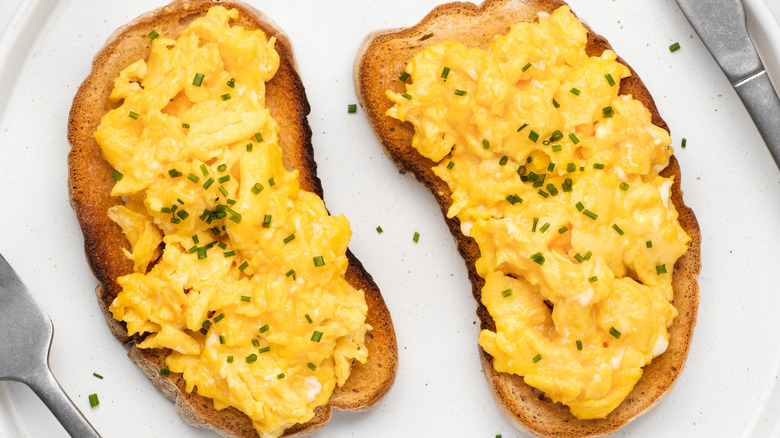
Fluffy Scrambled Eggs with Cheese are soft, tender, and filled with melted cheddar. Cooking the eggs slowly and folding them gently creates light curds without making them dry or rubbery.
This simple breakfast takes less than 15 minutes and pairs well with toast, breakfast potatoes, bacon, or fresh fruit. It is also easy to adjust with different cheeses, herbs, or cooked vegetables.
Why You’ll Love This Recipe
- Ready in less than 15 minutes.
- Uses only a few basic ingredients.
- Produces soft, fluffy egg curds.
- Easy to scale for more or fewer servings.
- Works with several types of cheese.
- Can be served on its own, with toast, or in breakfast sandwiches.
Ingredients
- 8 large eggs
- 1/4 cup whole milk
- 1/2 teaspoon kosher salt
- 1/4 teaspoon ground black pepper
- 1 tablespoon unsalted butter
- 3/4 cup freshly shredded cheddar cheese
- 1 tablespoon chopped fresh chives, for serving
Milk loosens the egg mixture and helps create a tender texture. Freshly shredded cheese melts more smoothly than packaged shredded cheese, which may contain anti-caking ingredients.
Ingredient Substitutions
- Whole milk: Use 2% milk, half-and-half, or 2 tablespoons of water.
- Unsalted butter: Substitute salted butter and reduce the added salt slightly.
- Cheddar: Use Monterey Jack, Colby, Swiss, mozzarella, pepper Jack, or crumbled feta.
- Fresh chives: Substitute chopped parsley, green onions, or dill.
- Black pepper: Omit it for a milder flavor or replace it with a small pinch of paprika.
How to Make Scrambled Eggs with Cheese
- Crack the eggs.
Crack the eggs into a medium mixing bowl. Check for any pieces of shell before adding the remaining ingredients. - Whisk the egg mixture.
Add the milk, salt, and black pepper. Whisk vigorously for 30 to 45 seconds, until the yolks and whites are completely blended and the mixture looks slightly foamy. - Preheat the skillet.
Place a large nonstick skillet over medium-low heat. Add the butter and allow it to melt, tilting the skillet to coat the bottom. - Add the eggs.
Pour the egg mixture into the skillet. Let it sit without stirring for approximately 20 seconds, until a thin layer begins to set around the edges. - Form soft curds.
Use a silicone spatula to gently push the cooked eggs from the edges toward the center. Tilt the skillet so the uncooked egg flows into the open spaces. - Continue cooking slowly.
Fold the eggs every few seconds rather than stirring constantly. Cook for 3 to 5 minutes, keeping the heat at medium-low. The curds should remain soft and slightly glossy. - Add the cheese.
When the eggs are mostly set but still look slightly moist, sprinkle the cheddar evenly over them. Fold gently for 30 to 60 seconds, until the cheese begins to melt. - Remove the skillet from the heat.
Take the eggs off the heat while they still appear a little softer than desired. They will continue cooking from the skillet’s residual heat. - Garnish and serve.
Sprinkle with chopped chives and serve immediately.
Tips for the Best Fluffy Scrambled Eggs with Cheese
- Whisk the eggs until no separate streaks of yolk or white remain.
- Use a nonstick skillet and silicone spatula.
- Keep the heat at medium-low.
- Push and fold the eggs instead of stirring rapidly.
- Add the cheese near the end of cooking.
- Remove the eggs while they still look slightly moist.
- Serve immediately because scrambled eggs continue to firm as they sit.
Common Mistakes to Avoid
Cooking Over High Heat
High heat makes eggs cook too quickly and can create a dry, rubbery texture. Use medium-low heat and allow the curds to form gradually.
Stirring Constantly
Rapid stirring creates very small curds and can make the eggs lose moisture. Use slow folding motions instead.
Adding Cheese Too Early
Cheese added before the eggs begin to set can release oil or cook unevenly. Add it when the eggs are nearly finished.
Leaving the Eggs in the Skillet Too Long
The hot skillet continues cooking the eggs after the burner is turned off. Transfer them to plates promptly.
Using Too Much Milk
Excess liquid can make the eggs watery and dilute their flavor. Use no more than 1/4 cup for eight eggs.
Variations
Bacon and Cheese Scrambled Eggs
Fold 4 slices of cooked, crumbled bacon into the eggs along with the cheese.
Spinach and Cheese Scrambled Eggs
Cook 2 cups of baby spinach in the butter until wilted. Remove excess liquid before adding the eggs.
Pepper Jack Scrambled Eggs
Replace the cheddar with pepper Jack and garnish with sliced green onions.
Herb Scrambled Eggs
Add 2 tablespoons of chopped parsley, chives, basil, or dill when adding the cheese.
Vegetable Scrambled Eggs
Cook 1 cup of finely chopped mushrooms, bell peppers, or onions before adding the egg mixture. Cook until excess moisture has evaporated.
What to Serve With Fluffy Scrambled Eggs with Cheese
- Buttered toast or English muffins
- Bacon or breakfast sausage
- Breakfast potatoes or hash browns
- Fresh fruit
- Pancakes or waffles
- Sliced avocado
How to Store
Scrambled eggs have the softest texture when served immediately. If necessary, allow leftovers to cool and place them in an airtight container. Refrigerate for up to 3 days.
Freezing is not recommended because the eggs may become watery or rubbery after thawing.
Reheat the eggs in a lightly buttered skillet over low heat, stirring gently until warm. They can also be microwaved at reduced power in 20-second intervals. Stop reheating as soon as they are warm to avoid drying them out.
Frequently Asked Questions
Does milk make scrambled eggs fluffy?
A small amount of milk can make the eggs softer and slightly lighter. Too much milk may create a watery texture.
Why are my scrambled eggs rubbery?
They were likely cooked over excessive heat or left in the skillet too long. Use medium-low heat and remove them while still slightly moist.
When should I add the cheese?
Add it when the eggs are mostly set but still glossy. This gives the cheese time to melt without overcooking the eggs.
Can I make scrambled eggs without milk?
Yes. Omit the milk or replace it with 2 tablespoons of water. The eggs will still cook properly.
What type of skillet works best?
A nonstick skillet makes it easier to form soft curds and prevents the eggs from sticking. A well-seasoned cast-iron skillet can also work.
Can I double this recipe?
Yes, but use a larger skillet and allow additional cooking time. Avoid overcrowding the pan with a very deep layer of eggs.
How do I know when scrambled eggs are done?
The eggs should form soft curds and no longer contain visible liquid. Remove them while they still look slightly glossy because they continue cooking off the heat.
Final Thoughts
Fluffy Scrambled Eggs with Cheese depend more on gentle cooking than complicated ingredients. Whisk thoroughly, use moderate heat, and remove the eggs while they remain soft for a tender, cheesy breakfast.