The Importance of Positive Affirmations in Promoting Resilience in Difficult Times

The Role of Positive Affirmations in Personal Development
In challenging times, the way we communicate with ourselves can shape our resilience. Positive affirmations serve as a powerful tool in boosting our mental fortitude, helping individuals navigate through adversity. Understanding the depth of their impact can lead to transformative personal growth.
Mindset Shift
Positive affirmations foster a growth mindset, encouraging individuals to view challenges as opportunities rather than setbacks. This shift in perspective can be profound; for instance, someone facing job loss might tell themselves, “This is a chance for me to explore new career paths.” By reframing their thoughts, they can approach the situation with optimism and creativity, rather than despair. This mentality is crucial, especially in high-stress environments, where the ability to adapt and innovate is paramount.
Emotional Regulation
Moreover, positive statements can significantly reduce symptoms of stress and anxiety, promoting emotional stability. Techniques such as repeating affirmations during moments of self-doubt—“I am capable of overcoming obstacles”—can create a calming effect. A 2016 study published in the journal *Psychological Science* demonstrated that participants who engaged in daily affirmations reported lower anxiety levels and greater emotional resilience. In a fast-paced society like the United States, where external pressures can weigh heavily, such emotional anchors can provide critical support.
Self-Efficacy
Regular practice of positive affirmations enhances belief in one’s abilities, increasing confidence in facing obstacles. Individuals who regularly affirm their skills—like “I am skilled and adaptable” or “I can learn anything I set my mind to”—often experience a marked increase in self-efficacy. This can be particularly beneficial in competitive situations such as job interviews or public speaking engagements, where self-confidence is essential. The affirmation technique can be as simple as writing in a journal or speaking aloud each morning, creating a ritual that reinforces self-belief.
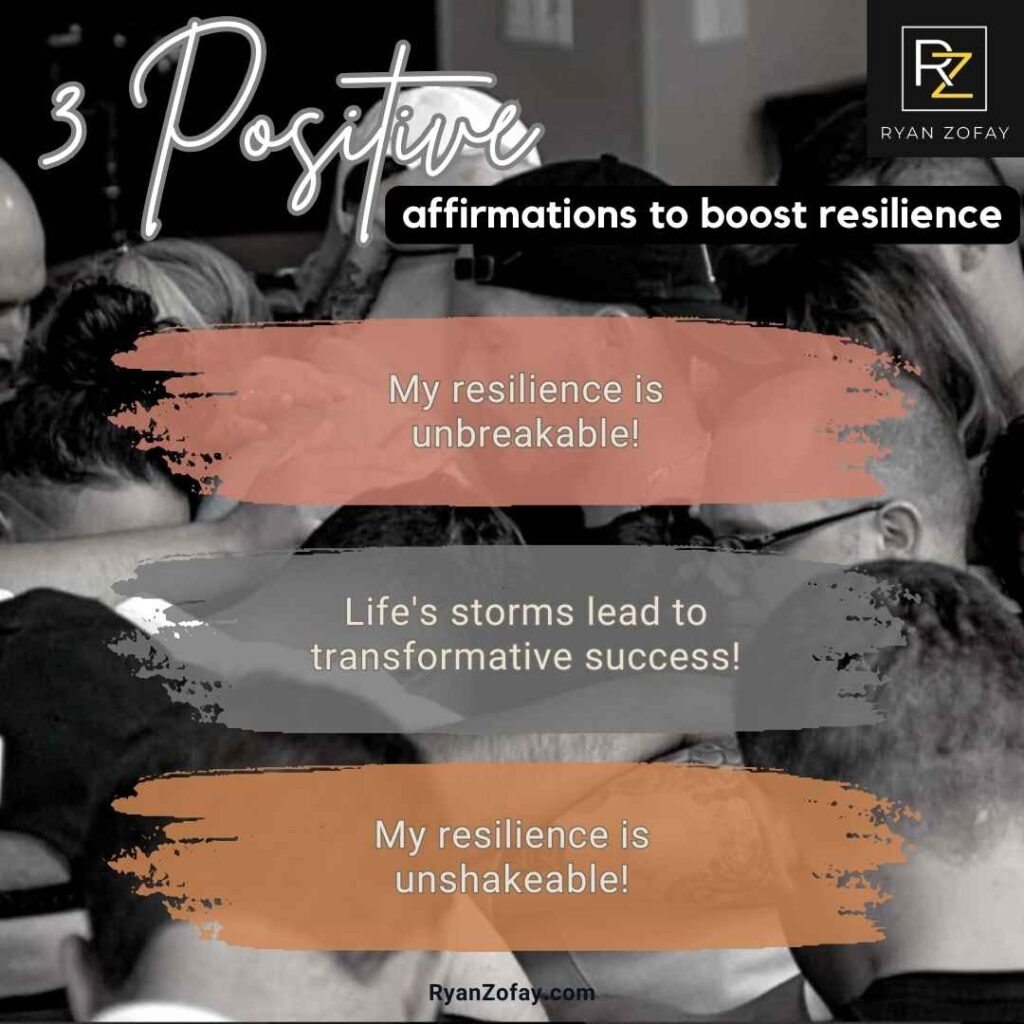
Empirical Evidence
Research shows that incorporating positive affirmations into daily routines can lead to significant improvements in mental health. A landmark study by the University of California found that participants who practiced affirmations exhibited lower cortisol levels, indicating reduced stress responses. These findings underscore the importance of positive self-talk, especially in the fast-paced lifestyle of many Americans, where stress is prevalent and often overwhelming.
Practical Application
To put these affirmations into practice, individuals can utilize methods like morning mantras or journaling. For example, starting the day with “I am prepared for the challenges that lie ahead” can set a proactive tone. Exploring resources like affirmation apps or workshops can also provide inspiration and structure. Integrating these practices allows individuals to cultivate a positive mental landscape, empowering them during tough times.
As we delve deeper into the significance of positive affirmations, it becomes clear that they can be harnessed to build resilience and transform your experience in the face of adversity. By fostering a positive internal dialogue, individuals can not only enhance their well-being but also equip themselves with the tools necessary to tackle life’s challenges head-on, emerging stronger and more capable than ever.
DISCOVER MORE: Click here to unlock the power of positive affirmations
Enhancing Resilience Through Daily Affirmations
In the wake of unprecedented challenges—be it personal crises, economic downturns, or global pandemics—individuals often grapple with feelings of uncertainty and demoralization. Enter positive affirmations, a simple yet transformative practice that can foster resilience during these difficult periods. By consciously choosing positive self-talk, people can create a fortified mindset that not only helps them cope but thrive, even in adversity.
The Power of Positivity
At the core of positive affirmations is the idea that our thoughts can influence our emotions and behaviors. When individuals engage in positive self-talk, they are essentially reprogramming their mental framework. For example, rather than succumbing to a narrative of defeat—“I can’t handle this”—one might replace it with, “I have overcome challenges before, and I can do it again.” This alteration in self-dialogue is not merely motivational chatter; it plays a crucial role in strengthening mental health.
Building a Supportive Inner Dialogue
To harness the full potential of affirmations, it’s essential to cultivate a supportive inner dialogue. This can include phrases such as:
- I am resilient and can face any challenge.
- Every setback is an opportunity for growth.
- My past experiences have equipped me for this moment.
- I am surrounded by support and love.
Using these statements consistently reinforces a sense of capability and fosters resilience. Studies indicate that individuals who regularly practice affirmations report an increase in optimism and a decrease in negative emotions, paving the way for better coping strategies.
Neuroscience Behind Affirmations
The benefits of positive affirmations are not just anecdotal; they are backed by neuroscience. Research has shown that repeating affirmations can activate regions of the brain associated with reward and motivation. A study from the American Psychological Association indicated that participants who practiced affirmations displayed increased prefrontal cortex activity—the part of the brain linked to self-control and rational decision-making. This increased activity not only aids in emotional regulation but also enhances problem-solving capabilities under stress.
Incorporating Affirmations into Daily Life
To make positive affirmations a part of daily life, individuals might consider several strategies:
- Morning mantras: Start each day with a short, powerful phrase that sets a positive tone.
- Gratitude journaling: Pair affirmations with gratitude lists to enhance their effectiveness.
- Visual reminders: Post sticky notes with affirmations around your home or workspace to reinforce positive thoughts throughout the day.
By weaving these affirmations into the fabric of daily routines, individuals can create a resilient mindset that not only withstands but flourishes amidst life’s challenges. The journey toward resilience is indeed a testament to the profound impact of our inner dialogue in creating a life well-lived, even in uncertain times.
The Power of Positive Affirmations
In difficult times, positive affirmations serve as a beacon of hope and strength. These simple yet profound statements, when repeated regularly, can profoundly influence our mindset and emotional well-being. By consciously choosing to replace negative thoughts with constructive affirmations, individuals can foster a resilient mindset that enables them to navigate through life’s challenges with grace. Research shows that engaging in daily affirmations not only enhances self-esteem but also cultivates a sense of empowerment, making it easier to tackle obstacles head-on.
The Mechanism of Change
Psychologists explain that positive affirmations work through a process known as self-affirmation theory. This theory postulates that reminding ourselves of our core values and strengths can buffer against stress and anxiety. For instance, stating affirmations like “I am capable of overcoming challenges” reinforces one’s belief in their abilities, allowing for better coping mechanisms during adversity. Individuals who practice this regularly often report increased motivation, a stronger sense of purpose, and an enhanced ability to focus on problem-solving rather than wallowing in despair.
Creating Your Affirmation Practice
Establishing a routine centered around positive affirmations can enhance resilience over time. One effective way to start is by writing down personalized affirmations tailored to your specific circumstances or goals. Placing these affirmations in visible spaces—like on your mirror or workspace—serves as a daily reminder of your strength. Moreover, integrating mindfulness techniques while reciting affirmations can amplify their impact, leading to a deeper emotional connection and understanding of your personal strengths.
| Benefits | Key Features |
|---|---|
| Enhances Emotional Resilience | Provides mental clarity and focus |
| Boosts Self-Esteem | Encourages positive self-talk and thought patterns |
As we can see, the importance of positive affirmations cannot be overstated. They offer a practical tool that, when utilized effectively, can reinforce strength during life’s turbulent times and promote lasting resilience. By embracing this practice, individuals not only enhance their mental fortitude but also pave the way for a healthier emotional landscape.
Dive Deeper: Click here to discover the power of daily affirmations
Transforming Challenges into Opportunities
Positive affirmations can serve as powerful tools for transforming challenges into opportunities. This process is essential for building resilience, allowing individuals to adapt and find strength in adversity. By reframing negative situations through affirmations, one can foster a more proactive and optimistic outlook. For example, instead of viewing job loss as a failure, a person might affirm, “This is an opportunity for me to explore new career paths and discover my passions.” Such a mindset shift can illuminate new possibilities that can lead to personal and professional growth.
Real-Life Applications of Affirmations
The impact of positive affirmations can be seen in various scenarios across different demographics. In schools, educators have implemented affirmation programs, encouraging students to voice empowering phrases that promote self-esteem and resilience. A study from Yale University highlighted that students who participated in affirmation exercises not only reported heightened academic motivation but also improved interpersonal relationships. Additionally, adults facing chronic illnesses have found solace in affirmations that reinforce their strength and determination in healing. Statements like “My body is capable of healing, and I will take charge of my health” enable individuals to reclaim a sense of control in their lives during tumultuous times.
Community and Collective Resilience
While positive affirmations are a personal practice, they can also strengthen community ties. Shared affirmations can create solidarity and build collective resilience among groups facing common challenges. Support groups, for example, often use affirmations to foster a sense of unity and hope among their members. Phrases such as “Together, we are stronger and can overcome any challenge” not only boost individual morale but also cultivate a supportive environment that encourages healing and resilience.
Affirmations in the Workplace
Employers are increasingly recognizing the value of positive affirmations for enhancing employee morale and resilience. Companies that promote a culture of positivity often see improved employee engagement and job satisfaction. Implementing affirmation practices, such as weekly team meetings where colleagues share uplifting statements, can create a sense of belonging and productivity. A recent survey by Gallup indicated that teams who engage in positive affirmation activities are 15% more productive and report greater workplace satisfaction compared to those who do not. Simple affirmations like “I contribute valuable skills to our team and help drive our success” can significantly shift workplace dynamics, leading to a more cohesive and resilient workforce.
Challenges to Implementation and Overcoming Doubts
Despite the proven benefits, some individuals may struggle to integrate affirmative practices into their lives due to skepticism or deeply ingrained negative beliefs. Addressing such challenges is vital. It may be helpful to start with realistic affirmations that resonate more authentically, moving gradually to bolder statements. Additionally, surrounding oneself with supportive communities or resources can help reinforce and normalize the practice of positive affirmations. Times of struggle are the very moments when affirmations can be most impactful, acting as reminders that resilience is not just about enduring challenges but also embracing growth.
DISCOVER MORE: Click here to learn how positivity can elevate your confidence
Conclusion: Embracing the Power of Positive Affirmations
As we navigate through the complexities of life, the significance of positive affirmations in promoting resilience cannot be overstated. These simple yet profound statements serve not only as catalysts for personal transformation but also as the foundation for collective strength. By consciously adopting affirmations, individuals can shift their mindsets from viewing obstacles as insurmountable barriers to seeing them as opportunities for growth. This reframing is crucial during difficult times, enabling people to rebound more effectively from setbacks.
The practical applications of positive affirmations in educational institutions, healthcare settings, and professional environments further illustrate their widespread benefits. From enhancing academic motivation in children to fostering a sense of community and support in the workplace, the ripple effects of positive affirmations can be transformative. Moreover, their role in fortifying not only individual resilience but also collective solidarity highlights the importance of shared hope in overcoming adversity.
However, it is vital to acknowledge that there may be challenges in incorporating these practices into daily life. Addressing skepticism and deeply ingrained negative beliefs requires patience and persistence. With the right support systems, individuals can strengthen their authentic belief in these affirmations, ultimately enriching their lives. As we move forward in uncertain times, let us remember that resilience is just as much about embracing our inner strength as it is about supporting one another through shared affirmations, paving the way for brighter and more hopeful futures.