

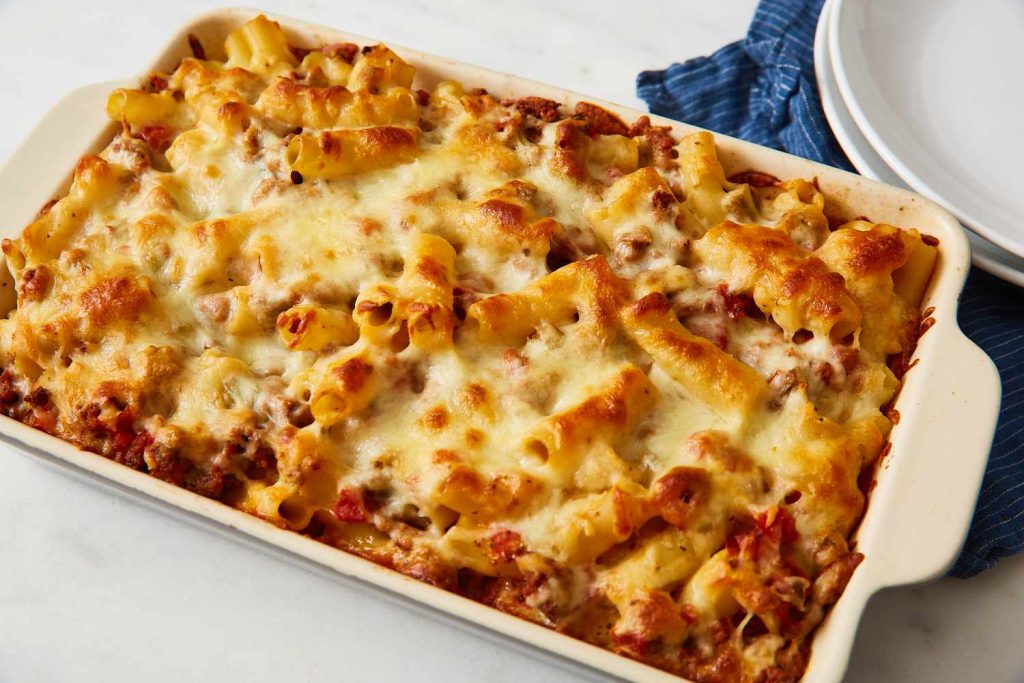
Cheesy Baked Ziti combines tender pasta, tomato sauce, creamy ricotta, mozzarella, and Parmesan in a warm, bubbling casserole. It delivers the comforting layers of a baked pasta dish without the extra work of assembling lasagna.
This meatless version is easy to prepare for a family dinner, potluck, or make-ahead meal. The pasta is slightly undercooked before baking, allowing it to finish in the sauce without becoming overly soft.
Why You’ll Love This Recipe
- Features three types of cheese.
- Requires simple layering rather than complicated assembly.
- Can be prepared ahead and refrigerated.
- Freezes well before or after baking.
- Feeds approximately eight people.
- Works as a meatless main course or a side dish.
Ingredients
- 1 pound ziti pasta
- 1 jar (32 ounces) marinara sauce, divided
- 1 container (15 ounces) whole-milk ricotta cheese
- 1 large egg
- 3 cups shredded low-moisture mozzarella cheese, divided
- 3/4 cup finely grated Parmesan cheese, divided
- 1 teaspoon Italian seasoning
- 1/2 teaspoon kosher salt, plus more for the pasta water
- 1/4 teaspoon ground black pepper
- 2 tablespoons chopped fresh basil or parsley
- Nonstick cooking spray, for the baking dish
Whole-milk ricotta gives the filling a creamy texture, while low-moisture mozzarella melts without releasing as much water as fresh mozzarella. The egg helps the ricotta layer hold together when the casserole is sliced.
Ingredient Substitutions
- Ziti: Use penne, rigatoni, mostaccioli, or another short tubular pasta.
- Whole-milk ricotta: Substitute small-curd cottage cheese. Drain excess liquid and blend it briefly for a smoother texture if desired.
- Mozzarella: Use provolone, fontina, or an Italian-style shredded cheese blend.
- Parmesan: Pecorino Romano can be used, but it is saltier, so reduce the added salt.
- Marinara sauce: Use another smooth tomato-based pasta sauce.
- Fresh herbs: Substitute 1 tablespoon of chopped fresh basil or parsley with 1 teaspoon dried parsley.
How to Make Baked Ziti
- Prepare the oven and baking dish.
Preheat the oven to 375°F. Lightly coat a 9-by-13-inch baking dish with nonstick cooking spray. - Cook the pasta.
Bring a large pot of generously salted water to a boil. Add the ziti and cook it for approximately 2 minutes less than the package’s al dente time. The pasta should remain slightly firm because it will continue cooking in the oven. - Drain the pasta.
Drain the ziti thoroughly without rinsing it. Return it to the pot and toss it with approximately 3 cups of marinara sauce, reserving the remaining sauce for assembling the casserole. - Prepare the ricotta mixture.
In a medium bowl, combine the ricotta, egg, 1 1/2 cups mozzarella, 1/2 cup Parmesan, Italian seasoning, salt, and black pepper. Stir until evenly mixed. - Add sauce to the baking dish.
Spread approximately half of the reserved marinara sauce over the bottom of the prepared dish. This prevents the pasta from sticking and keeps the bottom layer moist. - Add the first pasta layer.
Spoon half of the sauced ziti into the baking dish and spread it into an even layer. - Add the ricotta mixture.
Drop spoonfuls of the ricotta mixture over the pasta. Gently spread it into a mostly even layer. It does not need to cover every piece completely. - Finish the casserole.
Add the remaining ziti. Spoon the rest of the marinara sauce over the top, then sprinkle with the remaining 1 1/2 cups mozzarella and 1/4 cup Parmesan. - Bake covered.
Cover the baking dish loosely with aluminum foil. Bake for 20 minutes, until the casserole is hot around the edges. - Brown the cheese.
Remove the foil and bake for another 10 to 15 minutes. The sauce should be bubbling, and the cheese should be completely melted with a few lightly golden spots. - Rest before serving.
Remove the baked ziti from the oven and let it rest for 10 minutes. Garnish with chopped basil or parsley before serving.
Tips for the Best Cheesy Baked Ziti
- Undercook the pasta by approximately 2 minutes so it does not become mushy.
- Use whole-milk ricotta for a richer, creamier filling.
- Choose low-moisture mozzarella rather than fresh mozzarella.
- Coat the pasta generously with sauce before assembling the casserole.
- Cover the dish during the first part of baking to retain moisture.
- Remove the foil near the end so the cheese can brown.
- Let the casserole rest before cutting so the layers can settle.
Common Mistakes to Avoid
Fully Cooking the Pasta Before Baking
Pasta cooked until completely tender can become overly soft in the oven. Drain it while it is still slightly firmer than al dente.
Using Too Little Sauce
The pasta absorbs sauce as it bakes. Make sure the ziti is thoroughly coated and that additional sauce is placed beneath and over the casserole.
Using Fresh Mozzarella
Fresh mozzarella has a high moisture content and may make the casserole watery. Low-moisture mozzarella is more reliable for baked pasta.
Baking Uncovered the Entire Time
Leaving the casserole uncovered can dry out the pasta before the center becomes hot. Cover it first, then uncover it to brown the cheese.
Serving Immediately
The cheese and sauce need a few minutes to settle. Resting the casserole makes it easier to portion.
Variations
Meat Sauce Baked Ziti
Brown 1 pound of ground beef or Italian sausage in a large skillet. Drain excess grease, stir in the marinara, and use the meat sauce as directed.
Spinach Baked Ziti
Thaw 10 ounces of frozen chopped spinach and squeeze it thoroughly to remove excess water. Stir it into the ricotta mixture.
Spicy Baked Ziti
Add 1/2 teaspoon crushed red pepper flakes to the marinara sauce. Spicy Italian sausage can also be added.
Vegetable Baked Ziti
Cook 2 cups of chopped zucchini, mushrooms, or bell peppers until tender and their excess moisture has evaporated. Layer the vegetables with the pasta.
Extra-Cheesy Baked Ziti
Add 1 cup of shredded provolone or fontina, dividing it between the ricotta mixture and the topping.
What to Serve With Cheesy Baked Ziti
- Garlic bread or breadsticks
- Caesar salad
- Mixed green salad with vinaigrette
- Roasted broccoli
- Sautéed green beans
- Roasted zucchini or asparagus
How to Store
Allow leftover baked ziti to cool before covering the baking dish or transferring portions to an airtight container. Refrigerate for up to 4 days.
Baked ziti can be frozen before or after baking. Wrap the dish tightly or place individual portions in freezer-safe containers and freeze for up to 3 months. Thaw overnight in the refrigerator before reheating when possible.
Reheat individual portions in the microwave until hot. To reheat a larger amount, cover the dish with foil and place it in a 350°F oven. Add a few spoonfuls of marinara if the pasta appears dry.
Frequently Asked Questions
Can I prepare baked ziti ahead of time?
Yes. Assemble the casserole, cover it tightly, and refrigerate it for up to one day. Let the dish stand at room temperature while the oven preheats, then bake as directed. It may need several additional minutes.
Do I have to use ziti pasta?
No. Penne, rigatoni, mostaccioli, and other short tubular pasta shapes all work well.
Can I make baked ziti without ricotta?
Yes. Replace the ricotta with drained cottage cheese or omit the ricotta layer and add more mozzarella.
Why is my baked ziti watery?
The pasta may not have been drained well, fresh mozzarella may have released excess moisture, or watery vegetables may have been added without cooking them first.
Should baked ziti be covered while baking?
Cover it for the first 20 minutes to keep the pasta moist. Remove the foil for the final 10 to 15 minutes so the cheese can melt and brown.
Can I freeze baked ziti before baking?
Yes. Assemble the casserole in a freezer-safe dish without baking it. Cover it tightly and freeze. Thaw it overnight in the refrigerator before baking.
How do I prevent the foil from sticking to the cheese?
Coat the underside of the foil lightly with nonstick cooking spray or tent it loosely so it does not touch the cheese.
Final Thoughts
Cheesy Baked Ziti offers the comfort of layered pasta with a straightforward preparation. Slightly undercook the ziti, use enough marinara, and let the casserole rest after baking for creamy layers that hold together when served.