

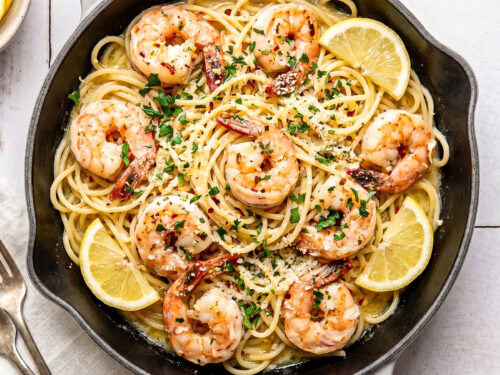
Garlic Butter Shrimp Pasta combines tender shrimp and al dente linguine with a light, buttery sauce flavored with fresh garlic, lemon, and parsley. A little reserved pasta water helps the butter coat the noodles without requiring a heavy cream sauce.
The shrimp cook in only a few minutes, so the entire meal can be ready in about half an hour. It is practical for a weeknight dinner but also polished enough for a relaxed dinner with guests.
Why You’ll Love This Recipe
- Ready in approximately 30 minutes.
- Uses one pot and one skillet.
- Features a light sauce made without heavy cream.
- Fresh lemon balances the richness of the garlic butter.
- Works with fresh or properly thawed frozen shrimp.
- Can be customized with spinach, tomatoes, or additional seasonings.
Ingredients
- 12 ounces linguine or spaghetti
- 1 pound large raw shrimp, peeled and deveined
- 1 teaspoon kosher salt, divided, plus more for the pasta water
- 1/2 teaspoon ground black pepper
- 1/2 teaspoon paprika
- 1 tablespoon olive oil
- 5 tablespoons unsalted butter, divided
- 6 garlic cloves, minced
- 1/4 teaspoon crushed red pepper flakes
- 1 teaspoon finely grated lemon zest
- 2 tablespoons fresh lemon juice
- 3/4 cup reserved pasta water, as needed
- 1/4 cup chopped fresh parsley
Large shrimp are less likely to overcook before developing color in the skillet. Reserved pasta water contains starch that helps the melted butter and lemon juice form a sauce that clings to the noodles.
Ingredient Substitutions
- Linguine: Use spaghetti, fettuccine, angel hair, or another long pasta.
- Large shrimp: Medium or jumbo shrimp can be used, but the cooking time will need to be adjusted.
- Unsalted butter: Salted butter works if the added salt is reduced.
- Olive oil: Use avocado oil or another neutral cooking oil.
- Fresh garlic: Substitute 1 1/2 teaspoons garlic powder and add it with the paprika.
- Fresh lemon juice: Use bottled lemon juice if necessary, although fresh lemon provides brighter flavor.
- Fresh parsley: Substitute chopped basil or chives.
- Crushed red pepper: Omit it for a completely mild dish.
How to Make Garlic Butter Shrimp Pasta
- Prepare the shrimp.
Pat the shrimp thoroughly dry with paper towels. Season them with 1/2 teaspoon salt, black pepper, and paprika. - Cook the pasta.
Bring a large pot of generously salted water to a boil. Add the linguine and cook until al dente according to the package instructions. - Reserve the pasta water.
Before draining the pasta, scoop out 3/4 cup of the cooking water. Drain the linguine without rinsing it. - Heat the skillet.
While the pasta cooks, heat the olive oil and 1 tablespoon butter in a large skillet over medium-high heat. - Cook the shrimp.
Arrange the shrimp in a single layer. Cook for 1 to 2 minutes on the first side, then turn and cook for another 1 to 2 minutes. The shrimp should be opaque and curled into loose C-shapes. Transfer them to a plate immediately. - Cook the garlic.
Reduce the heat to medium-low. Add the remaining 4 tablespoons butter to the same skillet. Once melted, add the garlic and crushed red pepper flakes. Cook for about 30 seconds, stirring constantly. - Start the sauce.
Add 1/2 cup of the reserved pasta water to the skillet. Stir while scraping up any browned bits from the bottom. Simmer gently for 1 to 2 minutes. - Add the pasta.
Place the drained linguine in the skillet. Add the remaining 1/2 teaspoon salt and toss continuously until the pasta is coated in the garlic butter sauce. - Finish with lemon.
Add the lemon zest and lemon juice. Toss again, adding the remaining pasta water a few tablespoons at a time if the noodles appear dry. - Return the shrimp.
Add the shrimp and any juices from the plate. Toss gently for about 1 minute, just until the shrimp are warmed through. - Garnish and serve.
Remove the skillet from the heat and add the parsley. Taste and adjust the salt, lemon juice, or red pepper as needed. Serve immediately.
Tips for the Best Garlic Butter Shrimp Pasta
- Pat the shrimp dry to encourage browning rather than steaming.
- Have the sauce ingredients ready before cooking the shrimp.
- Cook the pasta only until al dente.
- Reserve the pasta water before draining.
- Remove the shrimp as soon as they become opaque.
- Keep the heat moderate when cooking the garlic.
- Serve the pasta promptly because the butter sauce thickens as it cools.
Common Mistakes to Avoid
Using Wet Shrimp
Excess moisture prevents browning and can make the skillet watery. Dry the shrimp thoroughly before seasoning.
Crowding the Skillet
Overlapping shrimp release moisture and cook unevenly. Use a large skillet or cook them in two batches.
Overcooking the Shrimp
Shrimp become firm and rubbery when cooked too long. Remove them once they are opaque and loosely curled.
Burning the Garlic
Minced garlic cooks very quickly. Reduce the heat and stir constantly for about 30 seconds.
Forgetting the Pasta Water
Plain water will thin the sauce, but starchy pasta water helps the butter cling to the linguine. Reserve it before draining the pasta.
Variations
Creamy Garlic Shrimp Pasta
Add 1/2 cup heavy cream after cooking the garlic. Simmer gently for 2 minutes before adding the pasta water and noodles.
Spinach Shrimp Pasta
Add 3 packed cups baby spinach to the garlic butter sauce. Cook until wilted before adding the pasta.
Tomato Garlic Shrimp Pasta
Add 1 cup halved cherry tomatoes after removing the shrimp. Cook for 3 to 4 minutes before adding the garlic.
Cajun Shrimp Pasta
Replace the paprika and black pepper with 1 to 2 teaspoons Cajun seasoning. Reduce the added salt if the blend contains salt.
Shrimp Scampi-Style Pasta
Add 1/3 cup dry white wine after cooking the garlic. Simmer until reduced by about half, then add the pasta water.
What to Serve With Garlic Butter Shrimp Pasta
- Garlic bread
- Mixed green salad with vinaigrette
- Roasted asparagus
- Steamed broccoli
- Roasted cherry tomatoes
- Sautéed green beans
How to Store
Let leftovers cool before transferring them to an airtight container. Refrigerate Garlic Butter Shrimp Pasta for up to 2 days.
Freezing is not recommended because reheated shrimp can become rubbery and the pasta may lose its texture.
Reheat the pasta in a covered skillet over low heat. Add a small splash of water or broth and stir gently until warmed through. Avoid prolonged reheating, which can overcook the shrimp. Individual portions can also be microwaved at reduced power in short intervals.
Frequently Asked Questions
Can I use frozen shrimp?
Yes. Thaw the shrimp overnight in the refrigerator or place them in a sealed bag under cold running water. Dry them thoroughly before seasoning.
Should I leave the tails on the shrimp?
Either option works, but removing the tails makes the finished pasta easier to eat. Tails can be left on for presentation.
How do I know when shrimp are cooked?
Cooked shrimp are opaque and form loose C-shapes. Shrimp curled into tight circles are often overcooked.
Can I use precooked shrimp?
Yes, but do not sear them as directed. Add precooked shrimp during the final minute, just long enough to warm them.
Why is my butter sauce greasy?
The butter and pasta water may not have been tossed together long enough. Keep tossing the pasta so the starchy water can emulsify with the butter.
Can I add Parmesan?
Yes, although it will make the sauce heavier and saltier. Remove the skillet from the heat and stir in up to 1/2 cup finely grated Parmesan.
Can I make this pasta ahead of time?
The dish is best served immediately because shrimp can overcook during reheating. The shrimp can be cleaned and the other ingredients prepared several hours in advance.
Final Thoughts
Garlic Butter Shrimp Pasta comes together quickly once the ingredients are prepared. Cook the shrimp briefly, protect the garlic from excessive heat, and use reserved pasta water to create a light sauce that coats every strand.